
marble dust uses in industries manufacturer Grasping strong production capability, advanced research strength and excellent service, Shanghai marble dust uses in industries supplier create the value and bring values to all of customers.
 WhatsApp)
As a byproduct the company has a marble dust. Marble dust has various uses for example in the building industrie. Dust is captured by aspiration systems and fed by pneumatic transport to the storage silos. The customer requested fulldetection in the marble dust filled silos.
A type of synthetic marble can also be used for many different applications and is cheaper than the original marble. This kind of material is typically called 'cultured' marble and is created by taking crushed marble or marble dust and adding it to a fiberglass resin.
Marble is a metamorphic rock composed of recrystallized carbonate minerals, most commonly calcite or dolomite.Marble is typically not foliated, although there are exceptions.In geology, the term marble refers to metamorphosed limestone, but its use in stonemasonry more broadly encompasses unmetamorphosed limestone. Marble is commonly used for sculpture and as a building material
Marble Dust Powder is a metamorphic rock composed of recrystallized carbonate minerals, most commonly calcite or dolomite. Marble may be foliated. Geologists use the term "marble" to refer to metamorphosed limestone; however, stonemasons use the term more broadly to encompass un-metamorphosed limestone.
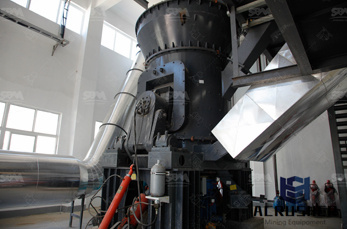
Marble dust has various industrial uses, in fact thanks to the high percentage of fines and the low percentage of metallic oxides, the ultra-fine calcareous particles could well be recovered and marketed for a number of industrial applications that employ micronized calcium carbonate.

The usability of waste marble dust as an additive material in industrial brick were investigated. Marble wastes were collected from marble deposits which are located at Southwest of Turkey and ...
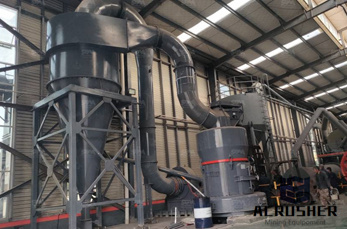
Is There Anything to Use to Fill in a Crack in a Marble Tabletop?. If you are fortunate enough to own a marble table, you want to keep it in top shape. This means dealing with small cracks or ...
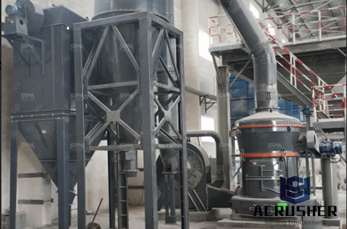
Waste marble dust and brick mortar were prepared for various processes of industrial brick investigation. Waste material in different proportions was mixed with industrial brick mortar starting amount of 0 wt.% up to 80 wt.%. in 41 × 8 × 8 mm rectangular prisms for testing of physico-mechanical properties of the samples having different ...
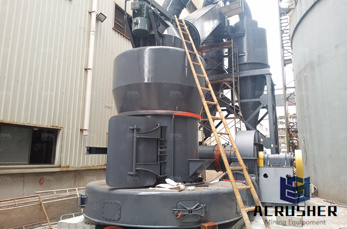
Marble dust has various industrial uses, in fact thanks to the high percentage of fines and the low percentage of metallic oxides, the ultra-fine calcareous particles could well be recovered and marketed for a number of industrial applications that employ micronized calcium carbonate. These include: agricultural soil amendment, ...

Sep 11, 2016· Marble stone industry generates both solid waste and stone slurry. Whereas solid waste results from the rejects at the mine sites or at the processing units, stone slurry is a semi liquid substance consisting of particles originating from the sawing and the polishing processes and water used to cool and lubricate the sawing and polishing machines.

Marble dust is a waste product formed during the production of marble. A large quantity of powder is generated during the cutting process. The result is that about 25% of the original marble mass ...
Marble Dust is also used in making gesso though it tends to be a harder and not as white as the French Chalk. Acrylic gesso uses marble dust as one of the primary components. It is used as an ingredient in Venetian and Marmorino plaster. It to can be used as a filler for paints or .
Oct 04, 2013· For the countries with a developed stone industry the waste generated in the natural stone processing plants pose environmental and economic problems. The utilisation of stone waste in various areas is still under research. In addition, there are only a limited number of studies concerning the use of stone waste obtained from processing plants in the stabilisation of clayey soil.
Jul 17, 2017· The marble dust is also known as plaster or marcite. White marble dust is one of the most popular colors, according to Pools of Perfection. It reflects the blue sky during the day and results in a sparkling and inviting pool area. Applying the marble dust yourself is possible if you rent the correct tools and work quickly.
Building Materials and Construction: Calcium carbonate is critical to the construction industry, both as a building material in its own right (e.g. marble), and as an ingredient of cement. It contributes to the making of mortar used in bonding bricks, concrete blocks, stones, roofing shingles, rubber compounds, and .

Industrial Uses. Marble dust has various industrial uses. It is used as filler in concrete and paving materials, and provides a valuable use for what is otherwise a waste material, according to an abstract reprinted on the Science Direct website. In areas such as Turkey, where marble is harvested from quarries, the amount of waste material in ...
Crushed stone #411 – A mixture of stone dust and #57 stone. For driveways, roads and as a base for retaining walls. It can also be used to patch holes in paved areas. The dust mixes with the larger stone and settles well. Crushed stone is a basic material used in various capacities. It is a widely used raw asset in the construction industry.
Quikrete 47 lbs. Marble Sand is fine-grit sand for mortar and plastering uses. Can be used for setting concrete blocks. Has to be mixed with cement in a 6:1 proportion. Finest grade in the market; Commercial/ residential uses; Beige color, gray finish when is mixed with cement; Made from marble; Learn more about concrete and cement here in our ...
Marble is a metamorphic limestone that is widely used in the sculpturing of statues and the construction of buildings and monuments. It is commonly used in tiles, countertops and indoor flooring. Working with these materials generates marble dust, which can cause respiratory issues and .
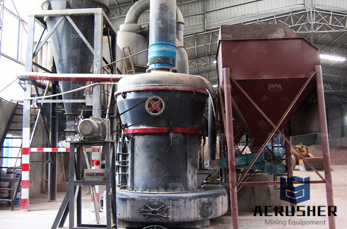
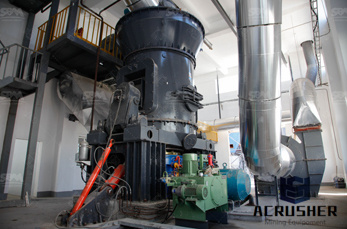
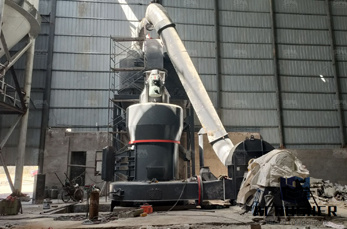
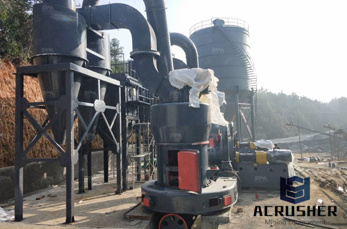
Marble Dust Uses In Industries. We are a large-scale joint-stock enterprise integrating R & D, production, sales and service. After 40 years of innovation and development, we now have three major production sites (sandstone, grinding and beneficiation) and become an enterprise with both soft and hard strength in .
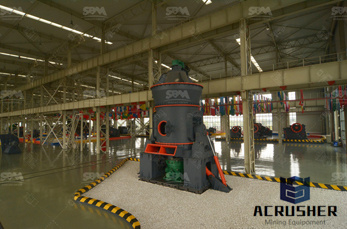
The use of marble powder dust offers cost reduction, energy savings, arguably superior products and fewer hazards in environment. Its addition helps in sustainable development. Marble powder adsorbs more water than cement. As a result, the ratio of water available for hydration is reduced leading to better mechanical strengths.
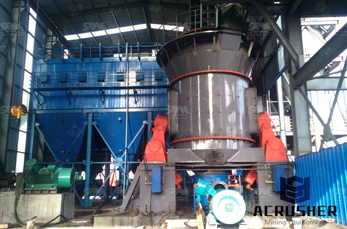
Marble dust is an industrial by-product obtained during sawing, shaping, and polishing of marble and causes a serious problem to the environment. Research indicate that the effect of mixing marble dust on the properties of cement such as consistency, initial and final setting times remain within the acceptable ranges of different standards.
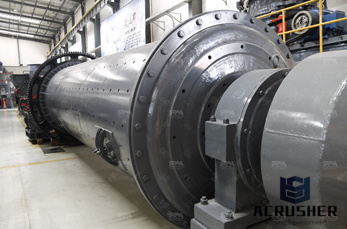
Fig 1: Marble Dust marble dust which must satisfied the requirement as Table 1: Chemical properties of marble dust Oxide compounds (mass %) Marble dust SiO 2 28.35 AL 2 O 3 0.42 Fe 2 O 3 9.70 CaO 40.45 MgO 16.25 Density 2.80 Application of Marble dust Power coating, paints and ceramic industry Reinforced polyester glass fiber
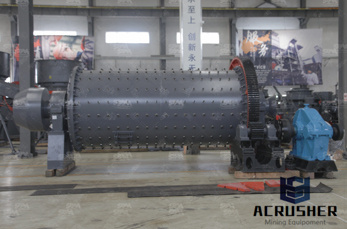
Marble dust can be mixed with various types of cement to form precast marble molded concrete. There are two types of cement that can be mixed with marble that will form a product that is hard and resilient: type S and Portland cement. The mixing methods, however, are the same. The average do-it-yourselfer can complete this procedure in one to ...
WhatsApp)
 Online Chat
 Sales Hotline