
reaction of acid and phosphate manufacturer Grasping strong production capability, advanced research strength and excellent service, Shanghai reaction of acid and phosphate supplier create the value and bring values to all of customers.
 WhatsApp)
ADVERTISEMENTS: In this article we will discuss about the two main types of general reactions in amino acids, i.e, enzymatic reactions using pyridoxal phosphate as the co-enzyme and deamination. 1. Enzymatic Reactions using Pyridoxal Phosphate as the Co-Enzyme: A number of reactions involving amino acids, like transamination, decarboxylation, elimination of the side chain with maintenance [.]

After the phosphate is separated from the sand and clay at the beneficiation plant it goes to the processing plant. There it is reacted with sulfuric acid to create the phosphoric acid needed to make fertilizer. The principal fertilizer product of the industry is diammonium phosphate (DAP), made by reacting ammonia with the phosphoric acid.

Hell-Volhard-Zelinskii Reaction. The treatment of carboxylic acids with bromine and phosphorus tribromide (P Br 3) or a mixture of bromine and phosphorus, yields the α-bromocarboxylic acid. Phosphorus tribromide is often applied only as a catalyst. Thus, if chlorine and P Br 3 are applied, chlorination occurs instead of bromination.

Reactions involving the contact of high phosphorus iron ore particles with concentrated sulfuric acid generate chemical reactions of phosphate and sulfate formation. Understanding kinetic data is a fundamental requirement of any process design and work optimization. Noting how changing a given parameter affects the reaction rate allows you to ...
acid phosphatase: [ as´id ] 1. sour. 2. a substance that yields hydrogen ions in solution and from which hydrogen may be displaced by a metal to form a salt. For the various acids, see under the specific name, such as acetic acid . All acids react with bases to form salts and water (neutralization). Other properties of acids include a sour ...
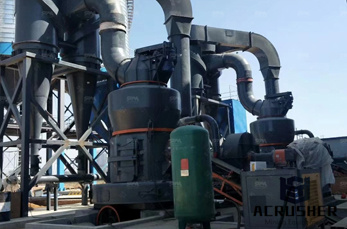
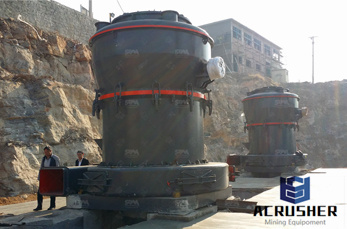
The phosphate rock is mined, dried, crushed until 60–70% of the rock is less than 150 μm in diameter, and then continuously fed into the reactor along with sulfuric acid. The reaction combines calcium from the phosphate rock with sulfate, forming calcium sulfate (CaSO 4), commonly referred to as gypsum. Gypsum is separated from the reaction ...
If less sulfuric acid is used di-calcium phosphate should be formed theoretically, however only mono-calcium phosphate and undecomposed phosphate rock result in practice. Acidulation to di-calcium phosphate is of considerable interest since less sulfuric acid would be required, thereby lowering production costs.
Titanium phosphate made from anatase had the largest amount qf acid (4.3 mmol/g) at the reactant ratio of R=1, while that prepared from rutile or titanyl hydroxide had a large acidity (0.6 mmol/g ...
Solution for Phosphoric acid, one of the acids used in some cola drinks, is produced by the reaction of phosphorus(V) oxide, an acidic oxide, with water..

Phosphoric acid, one of the acids used in some cola drinks, is produced by the reaction of phosphorus(V) oxide, an acidic oxide, with water. Phosphorus(V) oxide is prepared by the combustion of phosphorus. (a) Write the empirical formula of phosphorus(V) oxide. (b) What is the molecular formula of phosphorus(V) oxide if the molar mass is about 280.
Synthesis. Several methods exist for the preparation of phosphonic acids and their salts. From phosphonic acid. Most processes begin with phosphorous acid (aka phosphonic acid, H 3 PO 3), exploiting its reactive P−H bond.. Phosphonic acid can be alkylated under Mannich conditions to give aminomethylated phosphonates, which are useful as complexants. One example is the industrial .
Pure phosphoric acid is a crystalline solid (melting point 42.35° C, or 108.2° F); in less concentrated form it is a colourless syrupy liquid.The crude acid is prepared from phosphate rock, while acid of higher purity is made from white phosphorus.. Phosphoric acid forms three classes of salts corresponding to replacement of one, two, or three hydrogen atoms.
Conc. sulphuric acid is a very strong oxidising agent and therefore oxidises phosphorus directly to orthophosphoric acid( or simply phosphoric acid) and itself gets reduced to sulphurdioxide. Here is a chemical eq for the same.. Thanks for the a2a...

Amino Acid and Ascorbic Acid Methods: Reactive phosphorus is determined in essentially two steps for either the Ascorbic Acid Method (low range) or the Amino Acid Method (high range). The first step involves reaction of orthophosphate with molybdate in acid solution, which forms
The choice of which ammonium phosphate to use depends on the proportion of nitrogen and phosphorus needed for the crop. (b) Calcium phosphates. The calcium phosphates are used extensively as fertilizers. Calcium dihydrogenphosphate, Ca(H 2 PO 4) 2, is produced by the reaction of phosphate rock with sulfuric acid: This is known as superphosphate.
The process of the invention makes use of the action of ammoniation and condensation of urea phosphate, because owing to its mode of formation this compound gives rise to a separation of the impurities of wet process orthophosphoric acid, e.g., iron, aluminum, calcium, magnesia and fluorine, which remain in the mother liquors from ...
Phosphate ion, phosphoric acid occurrence, compounds, identification, reactions . The main source of phosphorous is apatite. Phosphoric acid (H 3 PO 4) is a weak acid. In many occasions phosphate ion give coloured precipitates. Phosphate ions are very important in fertilizing industry. Molecule of phosphate ion(PO 4 3-)
It is the less expensive process of the two. Concentrated sulfuric acid (93%) is added to tricalcium phosphate rock. This is typically found in nature as the substance fluorapatite. The products of this reaction are phosphoric acid and calcium sulfate or gypsum, along with other impurities.
The reaction of a carboxylic acid with phosphorus pentachloride produces an acid chloride. The reaction goes firstly by a cyclic transition state with the removal of HCl. Then via a nucleophilic addition of chloride where the carbonyl is simultaneously protonated. The final step is a cyclic transition state to form the acid chloride, HCl and ...
Potassium Phosphate, Dibasic is the dipotassium form of phosphoric acid, that can be used as an electrolyte replenisher and with radio-protective activity.Upon oral administration, potassium phosphate is able to block the uptake of the radioactive isotope phosphorus P 32 (P-32).
Oct 20, 2017· The direct methods correspond to the methods where the formation of the P–C bond yields simultaneously phosphonic acid. These reactions mainly use phosphorous acid (H 3 PO 3) as source of phosphorus. The main difficulty with such type of reaction is the purification of the product since crystallization, precipitation and dialysis constitute ...
The 29 observed reactions include the formation and/or interconversion of glucose, pyruvate, the nucleic acid precursor ribose-5-phosphate and the amino acid precursor erythrose-4-phosphate, antedating reactions sequences similar to that used by the metabolic pathways. Moreover, the Archean ocean mimetic increased the stability of the ...
Just as carboxylic acids do, inorganic acids such as nitric acid (HNO 3), sulfuric acid (H 2 SO 4), and phosphoric acid (H 3 PO 4) also form esters.The esters of phosphoric acid are especially important in biochemistry. A phosphoric acid molecule can form a monoalkyl, a dialkyl, or a trialkyl ester by reaction with one, two, or three molecules of an alcohol.
It is the less expensive process of the two. Concentrated sulfuric acid (93%) is added to tricalcium phosphate rock. This is typically found in nature as the substance fluorapatite. The products of this reaction are phosphoric acid and calcium sulfate or gypsum, along with other impurities.
WhatsApp)
 Online Chat
 Sales Hotline