
manufacturing process in cement industry manufacturer Grasping strong production capability, advanced research strength and excellent service, Shanghai manufacturing process in cement industry supplier create the value and bring values to all of customers.
 WhatsApp)
From crisp packets to concrete buildings: the European Cement Industry demonstrates how everyday waste fuels cement manufacturing CEMBUREAU's response to The Guardian's 'Concrete Week' Eurelectric and Energy-intensive industries call for an ambitious and comprehensive EU Industrial Strategy to enable industry's contribution to the EU ...
Apr 12, 2019· Implementation of cement industry day by day to increase the productivity beneficial for our future. New technique be developed to proper control cement manufacturing process. To proper continuous improvement of production process. Input, output and process control management.[5] Lesliam suggest that to control risk in cement manufacturing ...

Accurate cement production also depends on belt scale systems to monitor output and inventory or regulate product loadout, as well as tramp metal detectors to protect equipment and keep the operation running smoothly. The Cement Manufacturing Process flow chart sums up where in the process each type of technology is making a difference. NOTE:
• Chalk is porous and often has high moisture content that leads it to its use in the 'semi-dry/wet' manufacturing process of making cement. This particular process represents some 16% of total production. Shale • Shale is a pure sedimentary rock made of very fine silt, clay and quarz. Shale falls in the category of mudstones.
Aug 15, 2017· Hi, Following three distinct operations are involved in the manufacturing of normal setting or Portland ordinary cement: 1. Mixing of raw materials 2. Burning 3. Grinding MIXING OF RAW MATERIALS The raw materials such as limestone or chalk and sha...
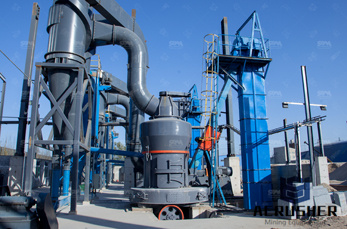
The cement industry is the building block of the nation's construction industry. Few construction projects can take place without utilizing cement somewhere in the design. Annual cement industry shipments are currently estimated at $7.5 billion for 2012; up from $6.6 billion in 2011.
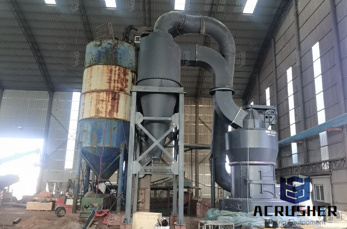
Cement manufacturing: components of a cement plant. This page and the linked pages below summarize the cement manufacturing process from the perspective of the individual components of a cement plant - the kiln, the cement mill etc.. For information on materials, including reactions in the kiln, see the ' Clinker ' pages.
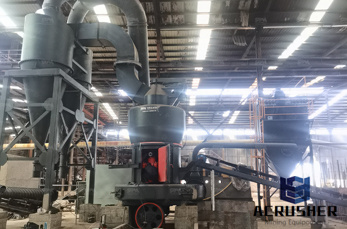
Nov 26, 2018· Cement manufacturing process.. °°°°°°°°°°°°°°°°′°°°°°°°°°°°°°°°°°°°°°°°°°°° Must watch this video and Share with your Friends..... °Mill, Hammer ...

Kiln and Kiln Shells: - As a Cement kiln manufacturers we manufacture all type of process equipments including Vertical and roller Kiln and Shells - Kiln Shells is involved in the process of burning the raw mixture thereby resulting in the clinker. This clinker is then subjected to grinding to produce cement.

11.6 Portland Cement Manufacturing 11.6.1 Process Description1-7 Portland cement is a fine powder, gray or white in color, that consists of a mixture of hydraulic cement materials comprising primarily calcium silicates, aluminates and aluminoferrites. More than 30 raw materials are known to be used in the manufacture of portland cement, and these
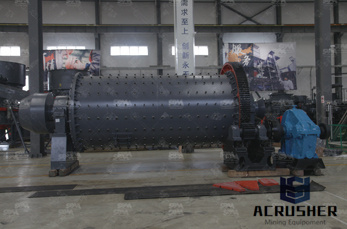
PROBLEMS.m m. CE!~!lT INDUSTRY '!'he major problem of the cement companies is the matter of marketing the product in sufficient quantities and at a price which will return a profit; however, there are some other problems
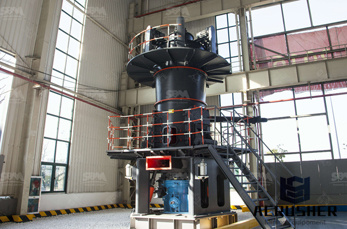
Sep 19, 2019· The cement manufacturing process involves several key steps, including preparing the raw materials, grinding the materials together, heating the newly formed clinker in a kiln, and finishing the cement with fine grinding. Some of the main ingredients used to make cement include limestone, clay ...
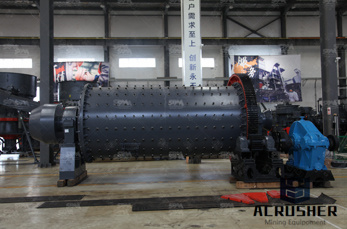
Global Cement Magazine article - New cement technologies. The cement industry worldwide is facing growing challenges in the context of saving material and energy resources as well as reducing its CO 2 emissions. The International Energy Agency highlighted in its 'Road Map for the Cement Industry' that the main levers for the cement producers are the use of alternative materials, be it as fuel ...
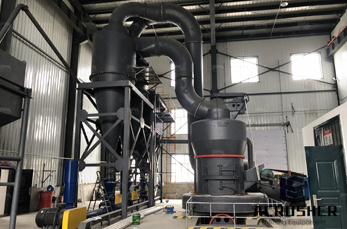
Cement is so fine that 1 pound of cement contains 150 billion grains. The cement is now ready for transport to ready-mix concrete companies to be used in a variety of construction projects. Although the dry process is the most modern and popular way to manufacture cement, some kilns in the United States use a wet process.
Apart from limestone, other raw materials used in the cement industry are fly ash, slag, and gypsum. Transportation cost In the cement sector, the manufacturing facilities and end-user markets are ...
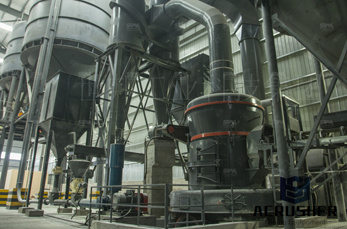
ii Cement and Lime Manufacturing Industries At present, about 78% of Europe's cement production is from dry process kilns, a further 16% of production is accounted for by semi-dry and semi-wet process kilns, with the remainder of European production, about 6%, coming from wet process kilns. The wet process .
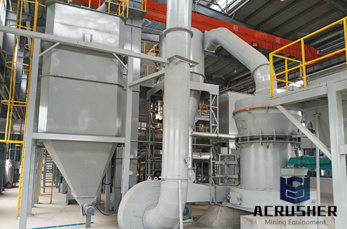
Five fire hazards associated with the cement manufacturing process are outlined in the following sections. 1) Coal Storage. On average 0.2 – 0.3 tonnes of coal are consumed in the kiln per kilogram of clinker cement production. As such coal storage during cement manufacturing is an important component to consider in hazard analysis.
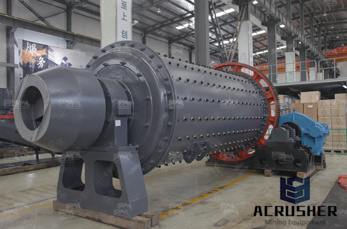
Aug 30, 2012· Cement Manufacturing Process Phase II: Proportioning, Blending & Grinding. The raw materials from quarry are now routed in plant laboratory where, they are analyzed and proper proportioning of limestone and clay are making possible before the beginning of grinding. Generally, limestone is 80% and remaining 20% is the clay.
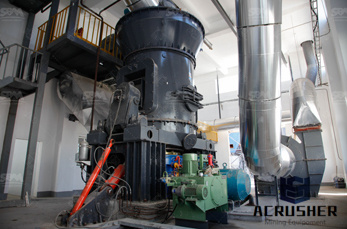
The cement manufacturing process starts from the mining of raw materials that are used in cement manufacturing, mainly limestone and clays. A limestone quarry is inside the plant area and a clays quarry is as far from the plant area as 25 km.

For details about Basic Process of Cement Manufacturing, refer toCement Manufacturing Process
Jan 28, 2017· Cement is topic;like and give credit for my free work cement cement and its types Manufacturing of cement uses of cement wet process dry process portland ce. Slideshare uses cookies to improve functionality and performance, and to provide you with relevant advertising.

Jul 31, 2013· Now let us discuss wet process and dry process detailed.WET PROCESS:In the wet process, first the clay is purified by washing in a wash mill.The lime stone is crushed into small particles and ...
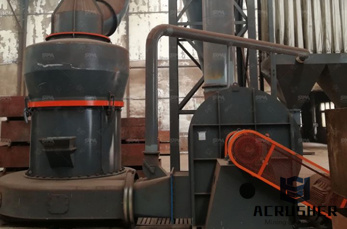
3.3 Raw materials for cement manufacture. ... (the wet process) or in dry form (the dry process). The addition of water facilitates grinding. However, the water must then be removed by evaporation as the first step in the burning process, which requires additional energy. The wet process, which was once standard, has now been rendered obsolete ...

The cement industry produces about 10% of global man-made CO 2 emissions, of which 60% is from the chemical process, and 40% from burning fuel. A Chatham House study from 2018 estimates that the 4 billion tonnes of cement produced annually account for 8% of worldwide CO 2 emissions.
WhatsApp)
 Online Chat
 Sales Hotline